

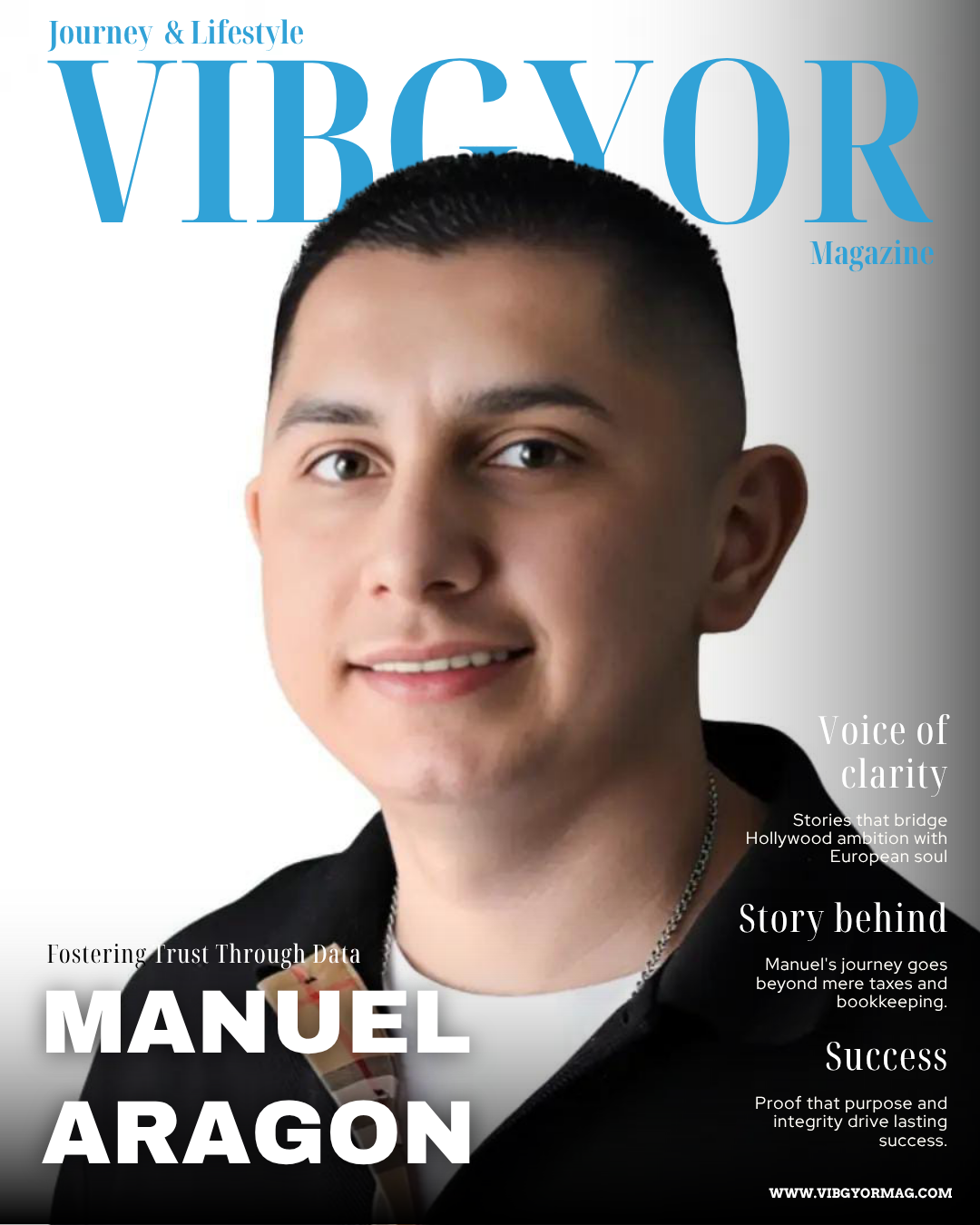
Most teenagers worry about grades, friendships, or fitting in. But at just 14 years old, Manuel Aragon faced a challenge few could imagine—his photo splashed across the front pages of local newspapers, accompanied by narratives constructed by people who knew nothing about him.
The articles were not invitations to praise or celebration. They were misinterpretations of a young boy’s reality—shaped by assumptions, not truth. These early encounters with public judgment carved deep emotional grooves in his adolescence, leaving him to navigate the heavy burden of being misunderstood.
For many, such an experience would become an unshakeable weight, something that shapes their entire self-image. But for Aragon, these moments of scrutiny became the first sparks of an inner fire—one that would lead him toward self-reflection, determination, and a powerful journey toward self-acceptance.
Turning Pain Into Purpose
Rather than allowing those early headlines to define him, Aragon chose another path. He redirected his pain into progress—first academically, then professionally, and eventually creatively.
He dove into education with unwavering discipline, earning degrees in accounting and immersing himself in roles that demanded precision, strategy, and trust. Through years of dedication, he built a career grounded in expertise within tax preparation, finance, cash planning, and corporate leadership.
But his journey wasn’t defined solely by spreadsheets and financial systems.
Writing became an emotional and artistic refuge—a safe space where he could process the wounds of his youth. Through storytelling, he learned to unravel complex emotions, articulate inner conflicts, and find clarity. This blend of intellect and creativity became the foundation of his transformation.
Aragon found not just accomplishment, but identity.
Building Connection Through Shared Vulnerability
One of the most defining chapters of Aragon’s life began when he realized he wasn’t alone.
The feelings of isolation, misunderstandings, and emotional battles he carried were not unique to him. Many others—especially young people—were facing similar struggles but lacked a voice, a guide, or a sense of belonging.
Instead of retreating inward, Aragon chose to reach outward.
He connected with communities where empathy, openness, and authenticity flourished. Through heartfelt conversations, shared stories, and moments of vulnerability, he discovered the incredible healing power of connection.
His willingness to share his experiences—public judgment, self-doubt, emotional pain—became a bridge. People found comfort in his transparency. They felt seen. Understood. Less alone.
Aragon often speaks about the “crown of thorns” we all wear—our invisible burdens that shape our lives. By acknowledging his own, he created space for others to do the same.
A Voice Challenging Stereotypes and Sparking Change
Today, Manuel Aragon is more than a tax professional, leader, or entrepreneur.
He is a voice of truth in a world obsessed with perfection.
Through social media, community impact, and personal storytelling, Aragon confronts stigma head-on—particularly around mental health, self-worth, and overcoming early life judgment.
His posts are candid: the hard days, the self-doubt, the victories, and the lessons learned. This raw honesty has drawn in thousands who resonate with his message. His voice has created conversations that matter—about healing, authenticity, and the courage to rewrite one’s own narrative.
Aragon has become an advocate not by force, but by presence.
Not by preaching, but by living openly.
His vulnerability has become his superpower.
A Reputation Built on Excellence and Integrity
Professionally, Aragon has carved a respected name for himself in Colorado’s financial landscape. His resume is marked by roles of extraordinary responsibility:
Tax Preparer
Chief Financial Officer (CFO)
Operations Manager
Finance Director
Strategic Consultant
His approach is built on innovation, accuracy, and an intuitive understanding of complex financial ecosystems. Companies rely on his strategies not just to function, but to grow. His leadership is defined by integrity—shaped by the lessons of his youth and the resilience of his adulthood.
But beyond his titles, Aragon’s real strength lies in the empathy he brings to his work.
He understands the weight of being underestimated.
And he has transformed that into a relentless drive to uplift, guide, and support others.
From Judgment to Empowerment: A New Kind of Strength
Aragon’s metaphor of the crown of thorns is more than poetic—it is deeply symbolic.
It represents the pain of being misjudged, the sting of public scrutiny, and the inner battles no one sees. But it also symbolizes what we become when we choose resilience over bitterness.
Through this journey, Aragon learned that self-acceptance requires:
Confronting painful memories
Embracing vulnerability
Letting go of others’ expectations
Allowing oneself to grow beyond old narratives
His transformation wasn’t overnight. It was gradual, intentional, and rooted in the courage to face himself honestly.
Today, he stands as a testament not to perfection—but to perseverance.
A Message That Transcends His Own Story
Aragon’s reflections extend far beyond his personal experience. His message is universal:
True success isn’t measured by titles, achievements, or public approval—
it’s measured by authenticity.
He reminds us that:
We all carry invisible wounds.
We all struggle with identity and self-worth.
We all face expectations that do not reflect our truth.
And we all have the power to rewrite our story.
In a world that often rewards conformity, his message is a breath of fresh air:
Be unapologetically yourself.
Conclusion: Wearing the Crown with Courage
Manuel Aragon’s life is a testament to the resilience of the human spirit.
The crown of thorns he once wore in pain has become a crown of triumph—proof that adversity can transform into wisdom and compassion when met with courage.
By choosing vulnerability over silence, he has paved the way for others to embrace their own authenticity. His story reminds us that while we cannot control how others perceive us, we can control how we rise above those perceptions.
His journey is not just one of survival, but of purpose.
Not just of overcoming, but of inspiring.
Not just of pain, but of transformation.
In the end, it’s not the thorns that define us—it’s the strength we gain by wearing them with dignity.
